1. Use Heated TubingOne of the most effective solutions for rainout is switching to heated tubing, which keeps the air temperature consistent from the machine to your mask.
By maintaining warmth throughout the tube, heated tubing prevents condensation from forming, which means no water buildup, no gurgling, and no surprise wakeups.
NuCara Tip: Most major CPAP machines have heated tubing options. We can help you find compatible heated tubing for your specific device.
2. Adjust Your Humidifier Settings
Your CPAP humidifier adds moisture to the air you breathe, helping prevent dryness in your nose and throat. But if the humidity setting is too high, it can lead to excessive moisture and, eventually, rainout.
Try lowering the humidifier level slightly and see if that helps. If your device has auto humidification mode, turn it on as it will adjust moisture levels based on your room’s temperature and humidity.
3. Place Your CPAP Machine Lower Than Your Head
Let gravity help you. When your machine is positioned lower than your sleeping position, any condensation that forms is more likely to drain back into the machine rather than pooling in your mask or tube.
A lower shelf on your nightstand, a footstool, or a purpose-built CPAP stand are all good options.
4. Insulate Your CPAP Hose
If you don’t have heated tubing, adding a CPAP hose cover or wrap can help reduce temperature drops along the tube’s length. These covers act as insulation and are especially useful in colder bedrooms or during winter months.
Hose covers are inexpensive, easy to install, and available at NuCara.
5. Keep Your Bedroom Temperature Stable
Rapid shifts in temperature between your room and your tubing are a major cause of condensation. Try to:
- 1. Avoid turning your thermostat down too low at night
- 2. Use blackout curtains to reduce nighttime cold drafts
- 3. Place your CPAP machine away from vents or windows
A small space heater or adjusting your central air just a few degrees higher overnight can make a big difference.
6. Try a Different Mask Style
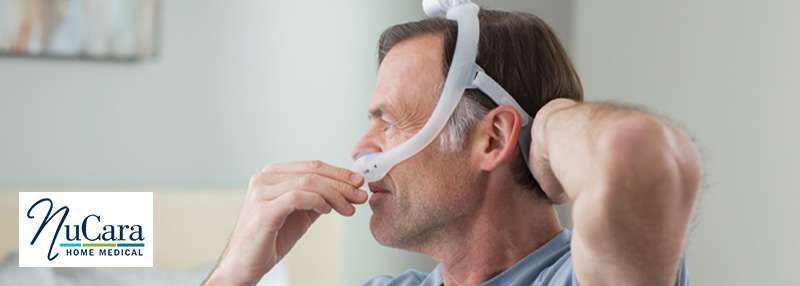
Some mask designs are more prone to condensation than others. Nasal pillow masks, for example, have shorter air paths and less surface area, which can lead to more noticeable rainout for some users.
If you’re consistently dealing with water in your mask, it may be time to explore alternative options like:
NuCara Tip: Not every mask works for every person or environment. Our team is here to help you find the best fit for your comfort and needs.