
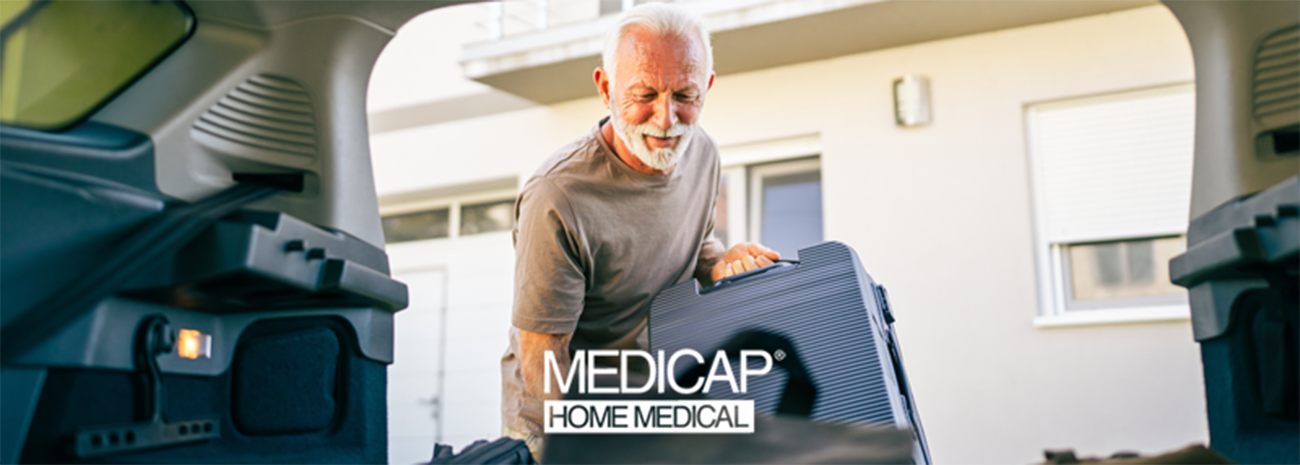
Traveling With Oxygen During the Holidays
Holiday trips already come with plenty to juggle, from schedules and suitcases to weather, traffic, and family plans. When oxygen equipment is also part of the trip, there are a few more details to sort out before you leave home.
Many people travel with oxygen, but it takes advance planning. Your healthcare provider should confirm whether the trip is appropriate for you, and your oxygen prescription or flow setting shouldn’t change without their guidance.
Equipment rules also vary by device, travel method, airline, and destination. Starting a few weeks ahead gives you more time to ask questions, prepare your equipment, and handle any paperwork.
Before You Book, Start With Your Healthcare Provider
Your prescribing provider is the right first call. They know your health history and can help you decide whether the trip fits where you are right now. Ask them:
- Is this trip appropriate for my current health?
- Do flying or altitude changes need special consideration?
- Do I need a written statement or other documentation?
- Do I need oxygen during every stage of travel?
- What symptoms should prompt me to seek care while I’m away?
- What’s my plan if my symptoms change or an emergency happens?
Only your healthcare provider should set or change your oxygen flow. If flying or traveling to a higher elevation could affect your needs, your provider should explain what to do.
Review Your Oxygen Equipment Plan
Next, talk with your equipment provider.
A portable oxygen concentrator, sometimes called a POC, takes in surrounding air and produces concentrated oxygen. An oxygen cylinder stores a limited supply of compressed oxygen. These devices work differently and follow different travel rules.
Some portable oxygen systems provide oxygen only when the person breathes in. This is called pulse-dose delivery. Others provide a steady flow of oxygen, known as continuous flow. The correct equipment must match the person’s prescription and individual needs.
Ask your equipment provider about:
- Which equipment is right for your travel plans
- Whether your portable device matches your prescription
- How long batteries last at your prescribed setting
- Charging options and compatible accessories
- Backup equipment, tubing, and cannulas
- Basic troubleshooting and equipment support
- Whether temporary or rental equipment is available
No single device is right for every traveler, so equipment choices should follow your prescription and a professional review.
Holiday Oxygen Travel Checklist
Save this list and work through it before you leave.
Equipment and Power
- Prescribed oxygen equipment
- Power supply and approved chargers
- Fully charged batteries
- Approved backup power, when applicable
- Extra cannulas or tubing
- Device manual
Important Information
- Equipment-provider contact information
- Healthcare-provider contact information
- Prescription or medical documents, when needed
- Airline or transportation paperwork
- Insurance and medication information
- Lodging contact information
Plans for the Trip
- A plan for oxygen and emergency care at your destination
- Weather-appropriate protection for your equipment
- A clean, stable place to keep the equipment
- Backup plans for delays, battery problems, or equipment trouble
Planning a Holiday Trip With Oxygen?
Medicap Home Medical, formerly NuCara Home Medical, can help with oxygen equipment and supplies.
Taking a Road Trip With Oxygen
A drive to Grandma's or across the state is often the simplest way to travel with oxygen, but it still takes some setup.
- Secure your equipment so it can't tip or slide, following the manufacturer's instructions.
- Keep it within reach instead of buried under luggage and gifts.
- Leave enough open space around a concentrator for airflow.
- Don’t leave equipment in a closed vehicle that’s extremely hot or cold.
- Keep oxygen away from smoking, open flames, heat sources, and fuel, including at gas stations.
- Plan charging stops and confirm that your vehicle charger is compatible with your device and approved by the manufacturer.
- Build in extra time for winter roads and holiday traffic.
- Know how to reach your equipment provider and where medical help is available at your destination.
Temperature and storage limits vary by device, so check the equipment manual rather than relying on a general rule.
Flying With Oxygen
Flying with oxygen is possible for many people, but the rules depend on the specific device and the airline.
Portable oxygen concentrators and compressed oxygen cylinders aren’t interchangeable. Certain portable oxygen concentrators may be permitted onboard. The FAA’s guidance for portable oxygen concentrators explains the federal requirements for using these devices during air travel. Check your device label and documentation, and contact the airline to confirm that your specific equipment is accepted.
Compressed oxygen cylinders follow different restrictions. Don’t assume the oxygen tank you use at home can travel on a commercial flight. Contact the airline directly to ask about its oxygen policy and available options.
The U.S. Department of Transportation’s portable oxygen concentrator guide notes that airlines may require:
- A physician’s statement about using a portable oxygen concentrator during some or all parts of the trip
- Advance notice before the flight
- Enough fully charged batteries to power the device for at least 150% of the flight time
Airline policies differ and can change, so contact the airline before booking and again before departure.
When planning battery power, account for more than the scheduled time in the air. Security lines, boarding, taxiing, layovers, and delays can extend the time before another reliable power source is available. Don’t assume aircraft power will be available or compatible with your device.
Spare lithium batteries must follow current airline, Transportation Security Administration, and Federal Aviation Administration requirements. The TSA’s current portable oxygen concentrator guidance states that certain portable oxygen concentrators are permitted with special instructions. The final decision at the security checkpoint rests with the TSA officer.
International travel may involve additional airline and country-specific requirements. Check with the airline and relevant transportation authorities before your trip.
Hotels and Family Visits
Whether you’re staying at a hotel or in a relative’s guest room, a quick call ahead can prevent last-minute surprises.
- Ask about outlet locations, room layout, and smoking policies.
- Choose a stable surface for your equipment with plenty of open space for airflow.
- Keep equipment away from fireplaces, candles, space heaters, gas stoves, and smoking areas.
- Route tubing away from busy walkways, especially around kids and pets.
- Only use extension cords or power strips if your device's manufacturer allows them.
- Keep your emergency and equipment provider numbers easy to find.
Winter Weather and Holiday Safety
Around the Holiday Table
Holiday gatherings can be warm and busy, which is exactly why a few simple habits help.
Let your host know ahead of time that you use oxygen and what you'll need. Sit away from lit candles, the fireplace, and the stove. Ask guests not to smoke or vape near you.
Keep your equipment upright and out of the way of foot traffic, and keep tubing out of busy walkways so no one trips.
Cold Weather and Backup Plans
Cold can affect devices and batteries, but temperature limits vary by device. Check the equipment manual and bring the device inside rather than leaving it in a cold vehicle.
Watch the forecast and road conditions, and leave extra time for ice, snow, and holiday traffic.
Your backup plan should cover:
- Approved backup power or equipment
- What to do if an alarm sounds, a battery runs low, or equipment stops working
- How to reach your equipment provider, including holiday hours and closures
- Where to find emergency medical care
- Current health, medication, and contact information
Don’t assume your equipment provider offers emergency or after-hours service unless that support has been confirmed before the trip.
Who Should I Call Before Traveling With Oxygen?
| Contact | What to ask about |
|---|---|
| Your healthcare provider | Whether travel is appropriate, your prescription and flow settings, symptoms, flying or altitude, documentation, and emergency planning |
| Medicap | Oxygen equipment, portable options, batteries and compatible accessories, supplies, troubleshooting, local service availability, and questions to ask your airline or destination provider |
| Your airline or transportation company | Device acceptance, advance notice, required forms, battery rules, seating or storage, and using oxygen onboard |
| Your hotel or host | Outlet access, smoking policies, room layout, fire and heat sources, equipment storage, and accessibility |
Start Planning Before Holiday Travel Gets Busy
A little preparation can make it easier to focus on the people and plans that matter. Contact Medicap early with oxygen equipment or supply questions, and confirm medical and travel requirements with the appropriate healthcare and transportation professionals.
This information is for general educational purposes and doesn’t replace medical advice or device instructions. Contact your healthcare provider before travel with questions about your oxygen prescription, flow settings, symptoms, altitude, or whether the trip is appropriate. Contact your equipment provider about oxygen equipment, compatible accessories, supplies, and device support.
Holiday Travel Questions From Oxygen Users
Can I travel while using oxygen?
Many people do, but whether travel is appropriate depends on your health, prescription, equipment, travel method, and destination. Ask your healthcare provider first, then confirm equipment and travel details with your oxygen provider and travel company.
Can I fly with a portable oxygen concentrator?
Certain portable oxygen concentrators may be used onboard when the device meets applicable FAA criteria and the airline accepts it. Confirm your specific equipment, paperwork, and battery requirements with the airline before traveling.
Can I bring an oxygen tank on an airplane?
Compressed oxygen cylinders follow different rules from portable oxygen concentrators. Don’t assume that your home oxygen cylinder can travel on the flight. Contact the airline directly to discuss its oxygen policy and available options.
How many batteries should I bring for a flight?
The number depends on your device, prescribed setting, itinerary, and airline. Airlines may require enough charged batteries for at least 150% of the flight time. Confirm the airline’s current policy and ask your equipment provider about expected battery life at your setting.
Can I leave oxygen equipment in the car?
Avoid leaving oxygen equipment in a closed vehicle that’s extremely hot or cold. Storage and operating limits vary, so follow the manufacturer’s instructions for your device.
What should I pack for a road trip with oxygen?
Bring your prescribed equipment, charged batteries, compatible chargers, extra tubing or cannulas, device manual, medications, documentation, and contact information for your healthcare and equipment providers.
Should I tell my hotel or family host that I use oxygen?
Yes. A quick heads-up lets them help plan for outlet access, room layout, smoking policies, fire sources, and a stable place for the equipment.
Who should I call before traveling with oxygen?
Contact your healthcare provider about medical questions, your equipment provider about devices and supplies, your airline or transportation company about travel rules, and your hotel or host about the room setup.